
Top Museums and Unique Places to Visit in Calvià
Calvià is not only famous for its golden beaches and lively coastline but also for its rich cultural heritage and unique landmarks waiting to be explored. Beyond the sun and sea, visitors can discover fascinating museums, historic sites, and remarkable places that reveal the true spirit of Mallorca. From traditional architecture and local art to charming villages and natural wonders, Calvià offers experiences that bring history and culture to life.
If you’re a curious traveler, or a history enthusiast, or simply looking to add variety to your holiday, Calvià’s museums and remarkable places provide a perfect way to connect with the region. Explore ancient churches, walk through picturesque squares, and step inside museums that showcase the island’s traditions and creativity. These highlights make your visit more memorable and offer a deeper understanding of what makes Calvià so special.
Table of Contents
Bellver Castle Museum
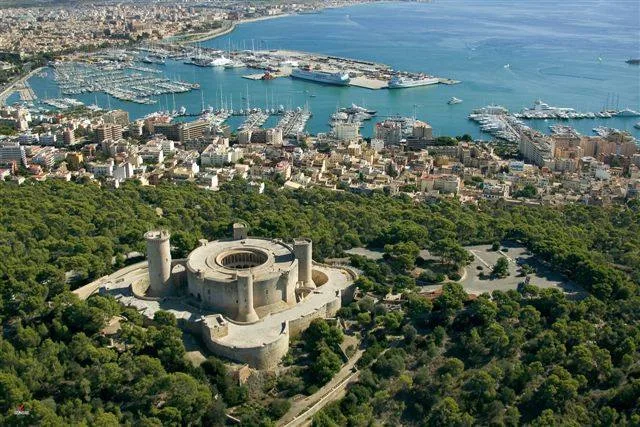
Bellver Castle is a Gothic-style castle on a hill 3 km to the west of the center of Palma on the Island of Majorca, Balearic Islands, Spain. It was built in the 14th century for King James II of Majorca, and is one of the few circular castles in Europe.

Palau de l’Almudaina
The Royal Palace of La Almudaina, which dates back to the 14th century, is the official residence of the King and Queen during their stays in Mallorca. Together with the Cathedral of Palma it is a landmark of the capital of the Balearic Islands. The palace reflects the artistic styles that have succeeded each other throughout the history of the island.
Official residence of the kings and queens of Spain in Palma de Mallorca
The royal castle of La Almudaina is situated in the part of the city of Mallorca where there have been settlements since Roman times and which has been the seat of power on the island possibly since then. Remains of the Arab citadel, which was mentioned in 12th and 13th centuries references, can still be found in the layout of the present castle.
The castle was built in the early 14th century between 1305 and 1314 for James II and flourished as the seat of the court of the kings of Mallorca in the first half of that century.
The seat of the High Court since Philip II, residence of the Viceroy and the Captain General and administrative centre of the Royal Heritage on the island, the Almudaina is currently the official residence of His Majesty the King during his visits to Mallorca.

THE TREASURES OF THE ALMUDAINA PALACE
The Royal Palace of La Almudaina, which dates back to the 14th century, is the official residence of the King and Queen during their stays in Mallorca. Together with the Cathedral of Palma it is a landmark of the capital of the Balearic Islands. The palace reflects the artistic styles that have succeeded each other throughout the history of the island. The Royal Palace of La Almudaina is one of the official residences of the Spanish royal family. Categorized as an Alcázar, it is located in Palma, the capital city of the Island of Mallorca, Spain.
COURTYARD OF HONOUR OR COURTYARD OF ARMS
This is the current venue for official receptions of the Royal Family and a white marble lion is preserved as a reminder of its Muslim past.
ARABIC BATHS
These were for the private use of the Muslim Walis who lived in the old Alcazar. These baths comprised a cold room, a warm room and a hot room.
GOTHIC HALL OR MAIN HALL
This is a large, solemn-looking hall; the most important in the Almudaina Palace. It was built in the reign of James II and since then it has been used to celebrate major festivities and to receive ambassadors. It was reformed during the time of Philip II.
Pilar and Joan Miro Foundation in Mallorca
Fundació Pilar i Joan Miró a Mallorca
“I want everything that I leave behind to stay just as it is when I am gone.”
Joan Miró
The Fundació Pilar i Joan Miró a Mallorca is a cultural centre based on the art studios that artist Joan Miró bequeathed to the public. It offers visitors an insight into his artwork and underlying creative process in the place where the artist lived and worked for almost 30 years. The Fundació aims to offer an interdisciplinary public service with a view to promoting knowledge, social links and participation, both at a local and international level. It is a centre for contemporary artistic creation and for reflection on subjects associated with Joan Miró’s work.
The Fundació’s collection is the outcome of a donation by Joan Miró. On March 7th 1981, Miró and his wife, Pilar Juncosa, donated the artist’s studios – the Sert Studio and Son Boter – to the Fundació Miró Mallorca, together with the works of art, documents and objects that were inside them. This generous legacy was made up of paintings, sculptures, drawings, objects and prints, together with a rich collection of documents and part of the contents of his personal library.

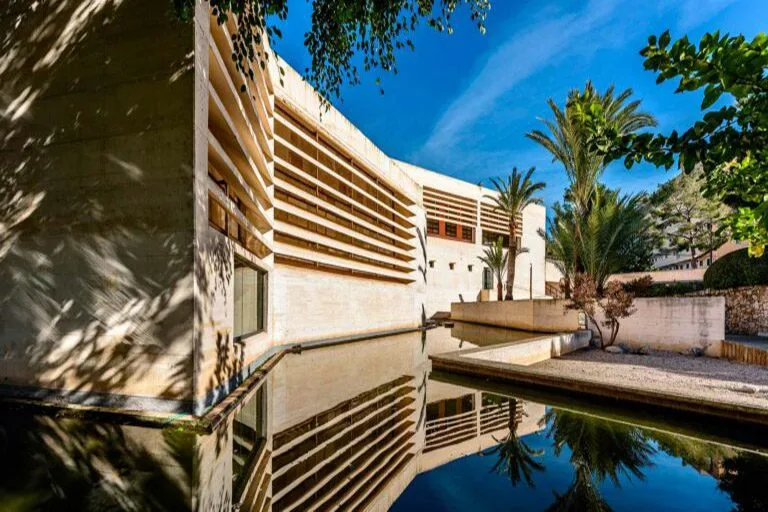
Museo Sa Bassa Blanca
Museo Sa Bassa Blanca is a unique cultural center where art and nature harmoniously coexist. Wander through contemporary art installations set amidst the breathtaking Mediterranean landscapes. Here, creativity and the environment seamlessly intertwine, offering a serene and thought-provoking experience.
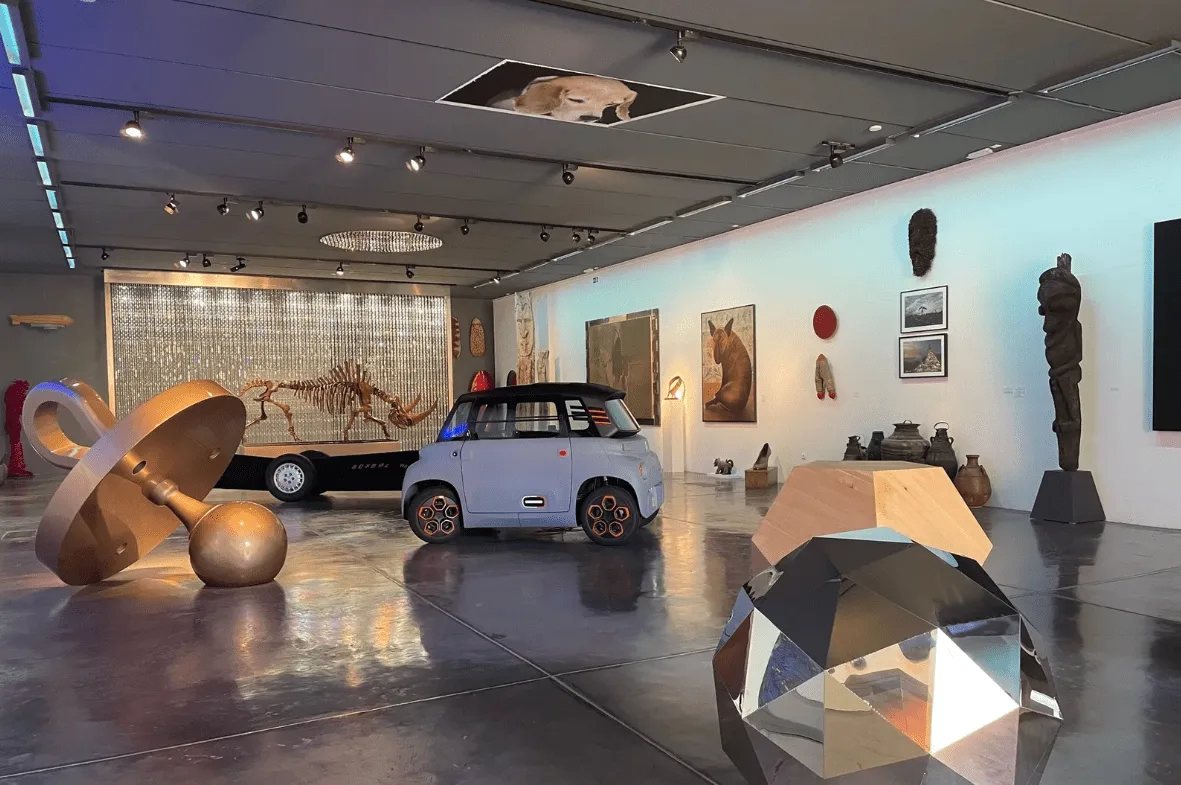
Es Baluard Museu d’Art Contemporani de Palma
Nestled in the heart of Palma, Mallorca, Es Baluard Museu d’Art Modern i Contemporani is a captivating cultural institution that celebrates the dynamic world of modern and contemporary art. As you step into this architectural gem, you’ll embark on a journey through artistic innovation, creative exploration, and visual storytelling.
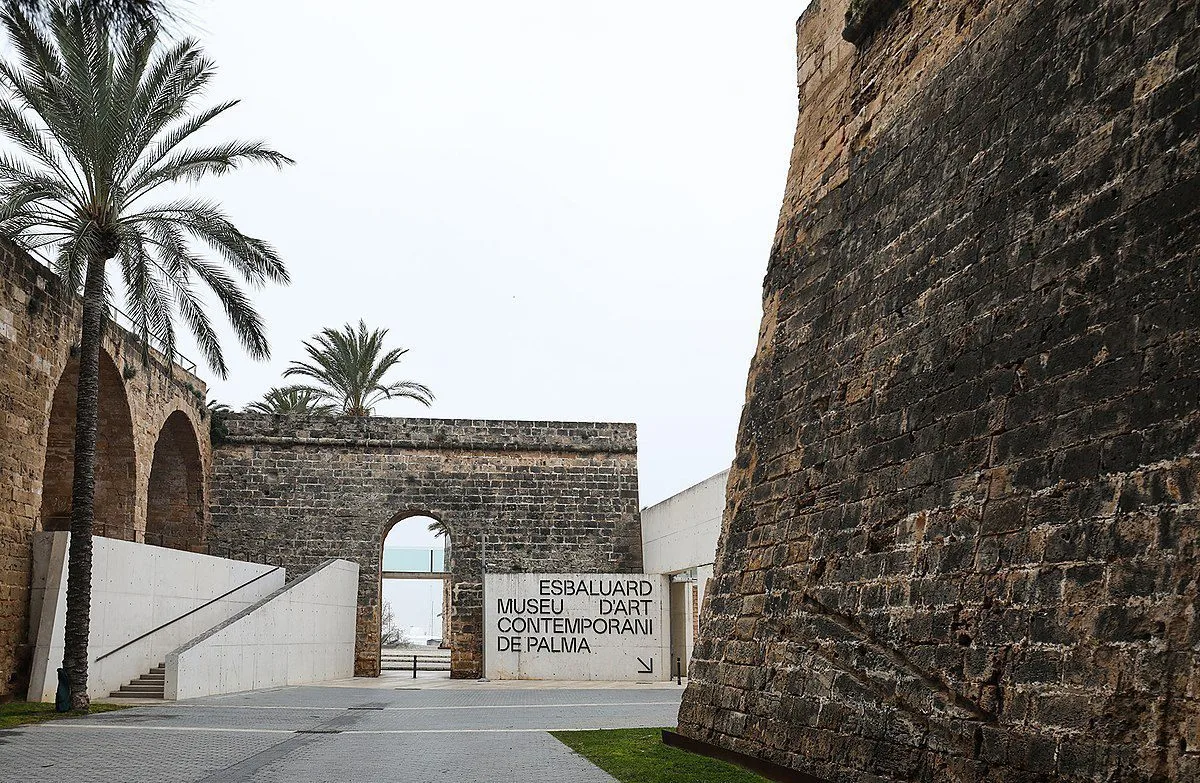
Rafa Nadal Museum
The Rafa Nadal Museum stands as a tribute to the legendary tennis player. Here, you can explore the world of sports, discover Nadal’s remarkable achievements, and gain insight into the life and career of this iconic tennis superstar. It’s a must-visit destination for sports enthusiasts and admirers of Nadal’s remarkable journey.

Museu Fundacion Juan March Palma
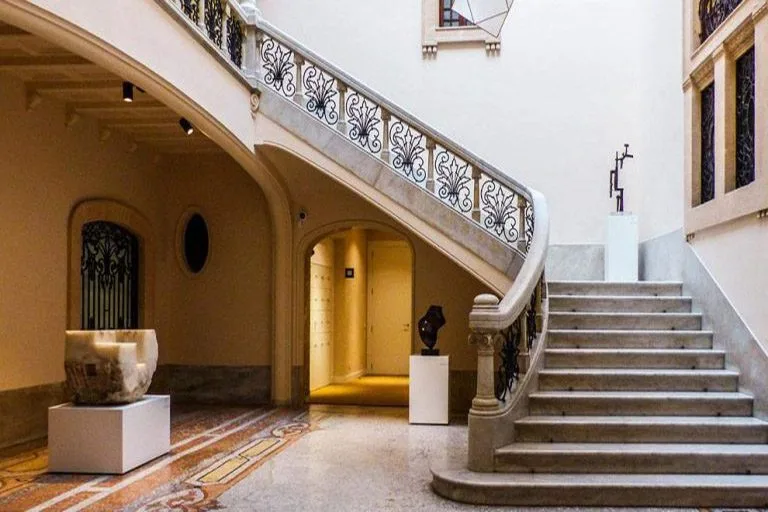
Located in an old seventeenth-century manor house in the historic center of Palma, the Juan March Foundation Museum is a cultural center that exhibits its collection of contemporary Spanish art and periodically rearranges it to host temporary exhibitions. It also organizes cultural activities.
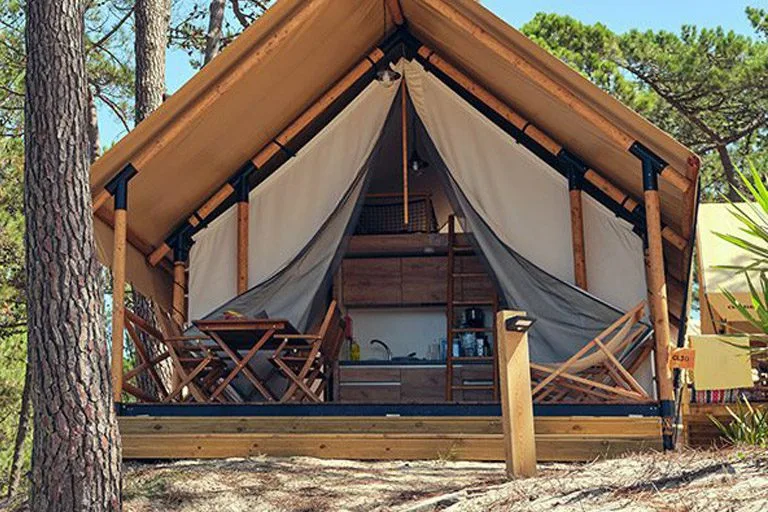

Es Baluard Museu d’Art Modern i Contemporani de Palma
History
Es Baluard Museu d’Art Contemporani de Palma is located on the perimeter of the bastion of Sant Pere, which forms part of the Renaissance walled enclosure that surrounded the city of Palma until the early 20th century.
The construction of the defensive bastion dates back to the last quarter of the 16th century. In this period, the ancient medieval walls were reinforced with the construction of new walls designed by the Italian engineer Giacomo Palearo Fratín. The bastion of Sant Pere stands out for its large dimensions and strategic location, which is why it was the place chosen to install one of the most prestigious artillery schools in Europe.


Museu de Mallorca
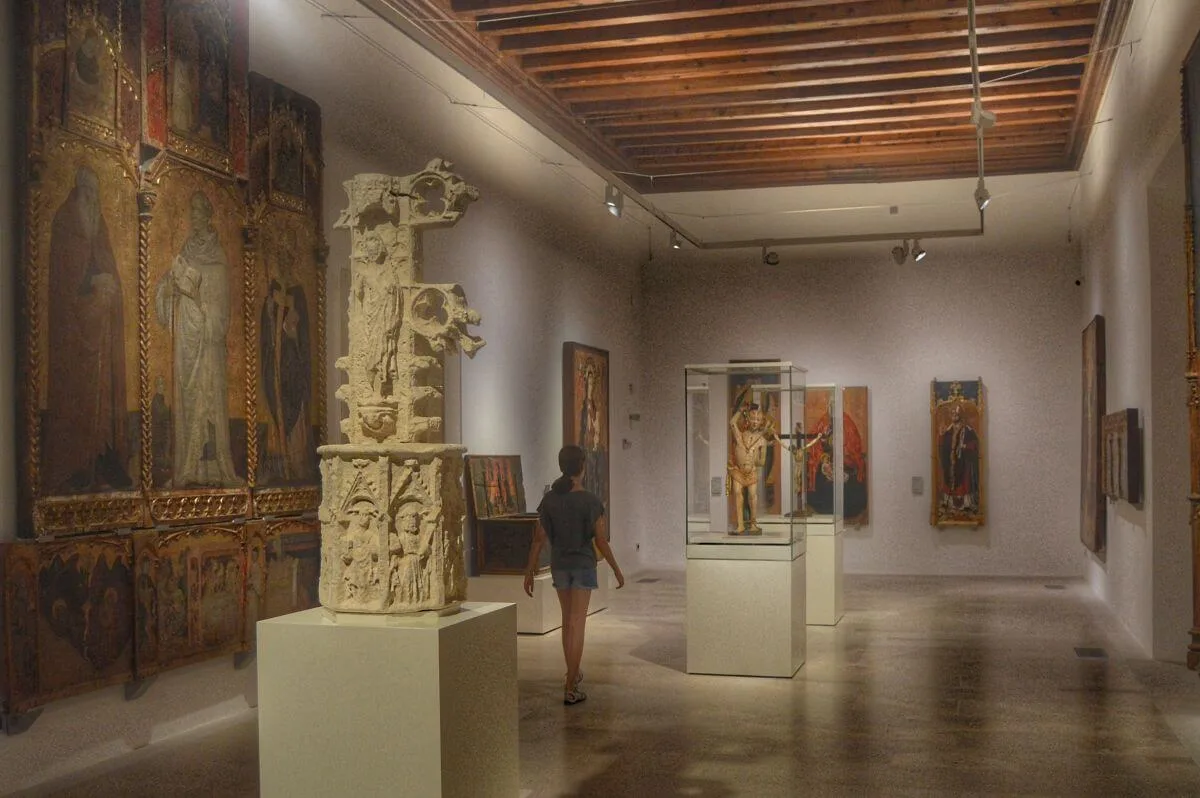
The Museum of Mallorca is state-owned, with the management transferred to the Government of the Balearic Islands and with organic dependence of the Ministry of Education, Culture and Universities. It was created by Decree of 2 November 1961 from the collections of the old Provincial Museum of Fine Arts, the Marroig collection, the archaeological collections owned by the State, the collections deposited by the Lullian Archaeological Society and the Prado Museum. Since then, the collections have increased extraordinarily, divided into several sections: archaeology, ethnography, fine arts and decorative and industrial arts.
The main headquarters are located in Palma in the house of the Counts of Aiamans, better known as Can Desbrull or popularly as Ca la Gran Cristiana. It has two sections in the Foreign Part, the Ethnological in Muro and the Monograph of Pollentia in Alcúdia.
The Museum is a scientific and cultural centre that aims to satisfy the research, educational and recreational needs of different types of users. It is also a place open to scientific research, study and consultation, learning, exploration, discovery and enjoyment, referring all this to the field of history, art and culture of the island of Mallorca.
The reason for being of the Museum of Mallorca is to preserve, to investigate and to disseminate the set of artistic and material objects of the museum collection, in addition to the documentation and dissemination of the collections and their cultural environment, in order to testify to our history and characterize the cultures of the past and to serve as an element of cohesion of today’s and future society.

Can Prunera Museum of Modernism
Can Prunera Museum of Modernism is a treasure trove of art from the modernist era. Explore a world of creativity and innovation, showcasing the beauty and imagination of the early 20th century. The museum’s collection offers a window into a transformative period in art history, filled with inspiration and innovation.

Pueblo Español
Pueblo Español is a charming open-air museum that meticulously replicates the architecture and culture of Spain’s diverse regions. Stroll through its picturesque streets and plazas, immersing yourself in the rich tapestry of Spanish heritage. It’s a delightful journey through the essence of Spain, right in the heart of Palma
Palau March Museu
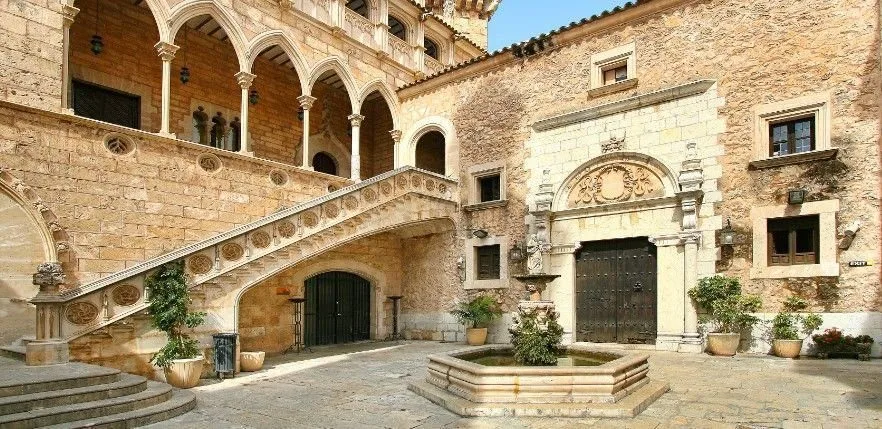
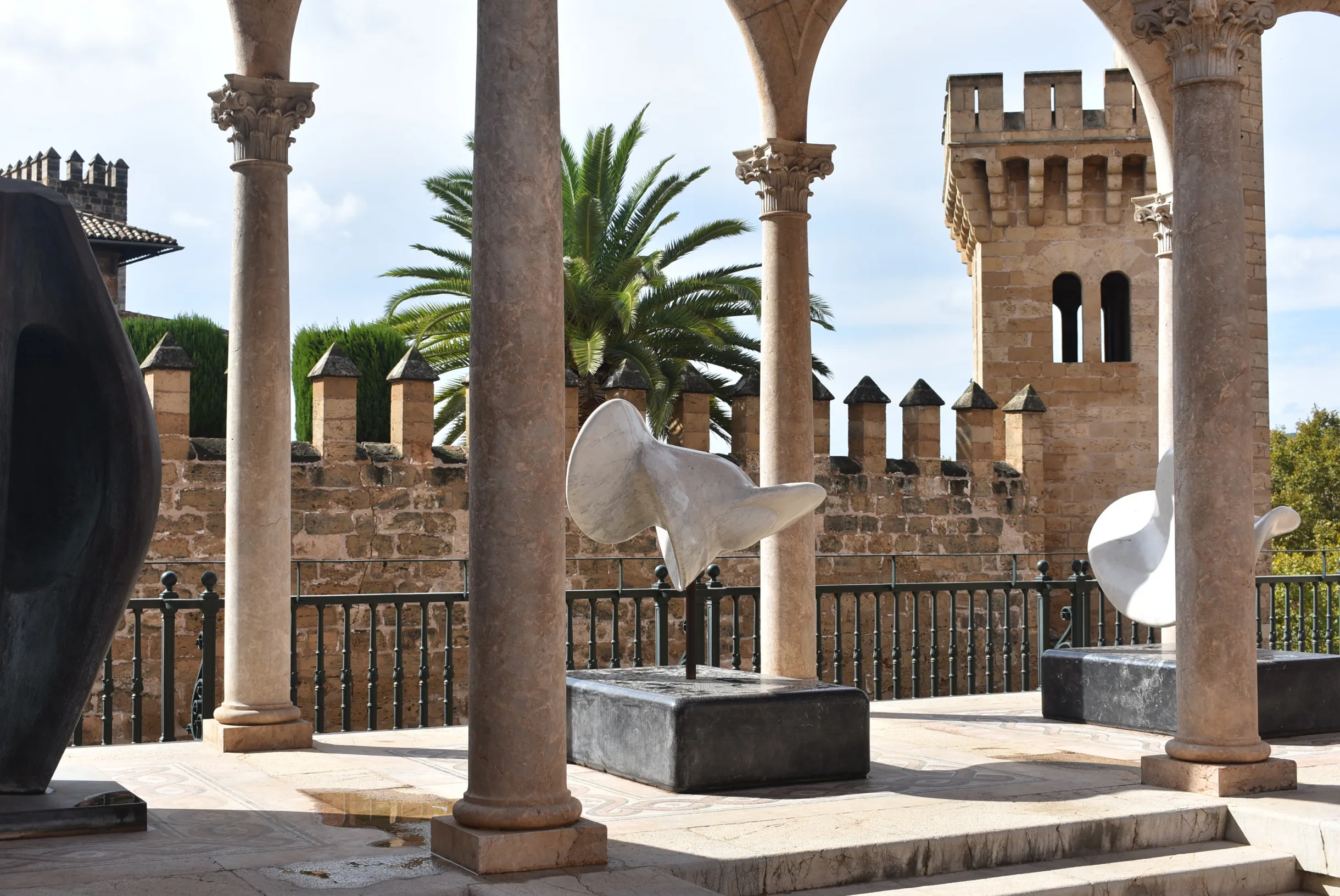
This museum is home to the Bartolomé March Foundation’s collection of art and books. It is situated in the heart of Palma de Mallorca’s historic old town.The museum is located in Palau March palace, and has a collection of contemporary sculpture on display in the patios, with outstanding works by artists such as Rodin, Moore and Chillida. It also has a series of 40 religious sculptures in polychromed wood. One of the rooms contains an 18th-century crib from Naples, with more than 1,000 dressed, painted pieces, while in the Book Room you can see manuscripts, incunabula and codices, as well as a unique collection of nautical maps from the 15th-17th centuries.
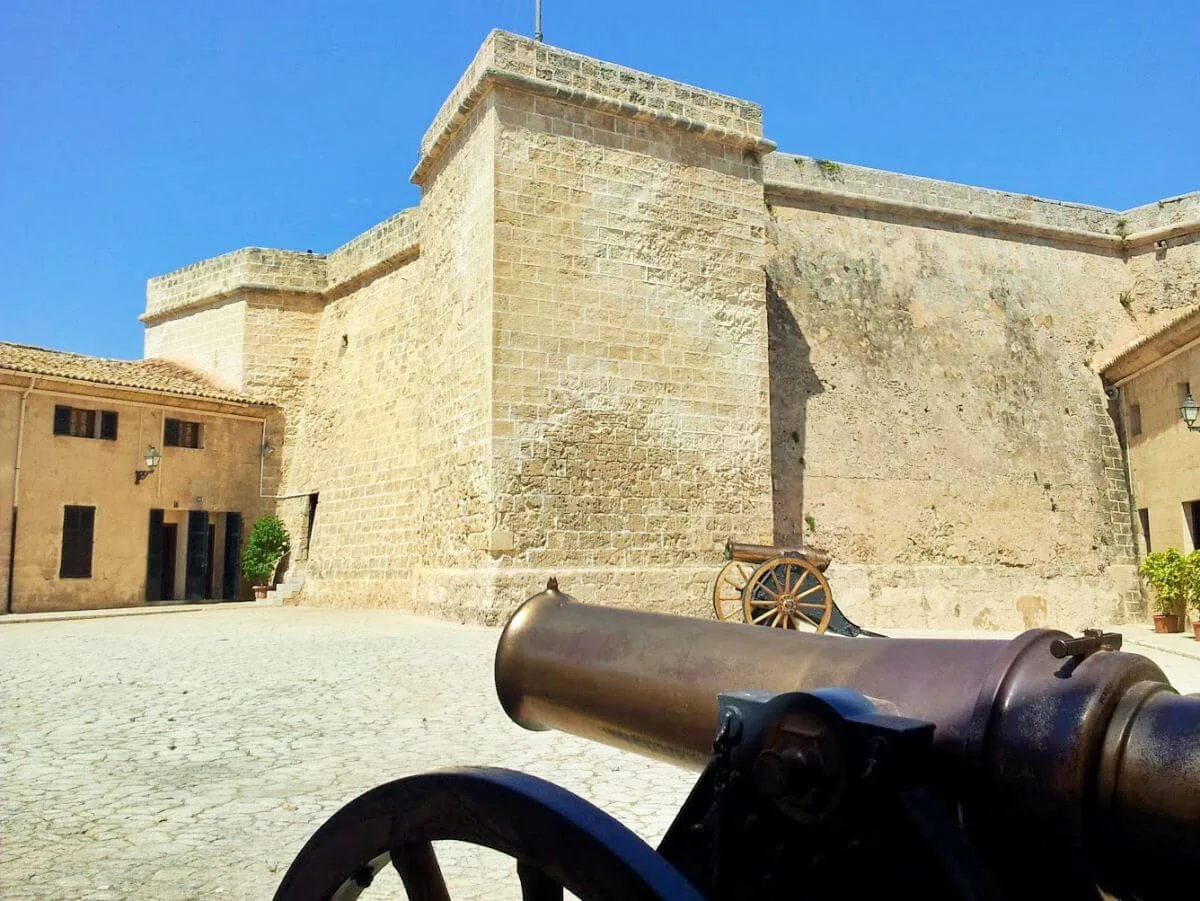
Museo Historico Militar de San Carlos

Valldemossa Charterhouse
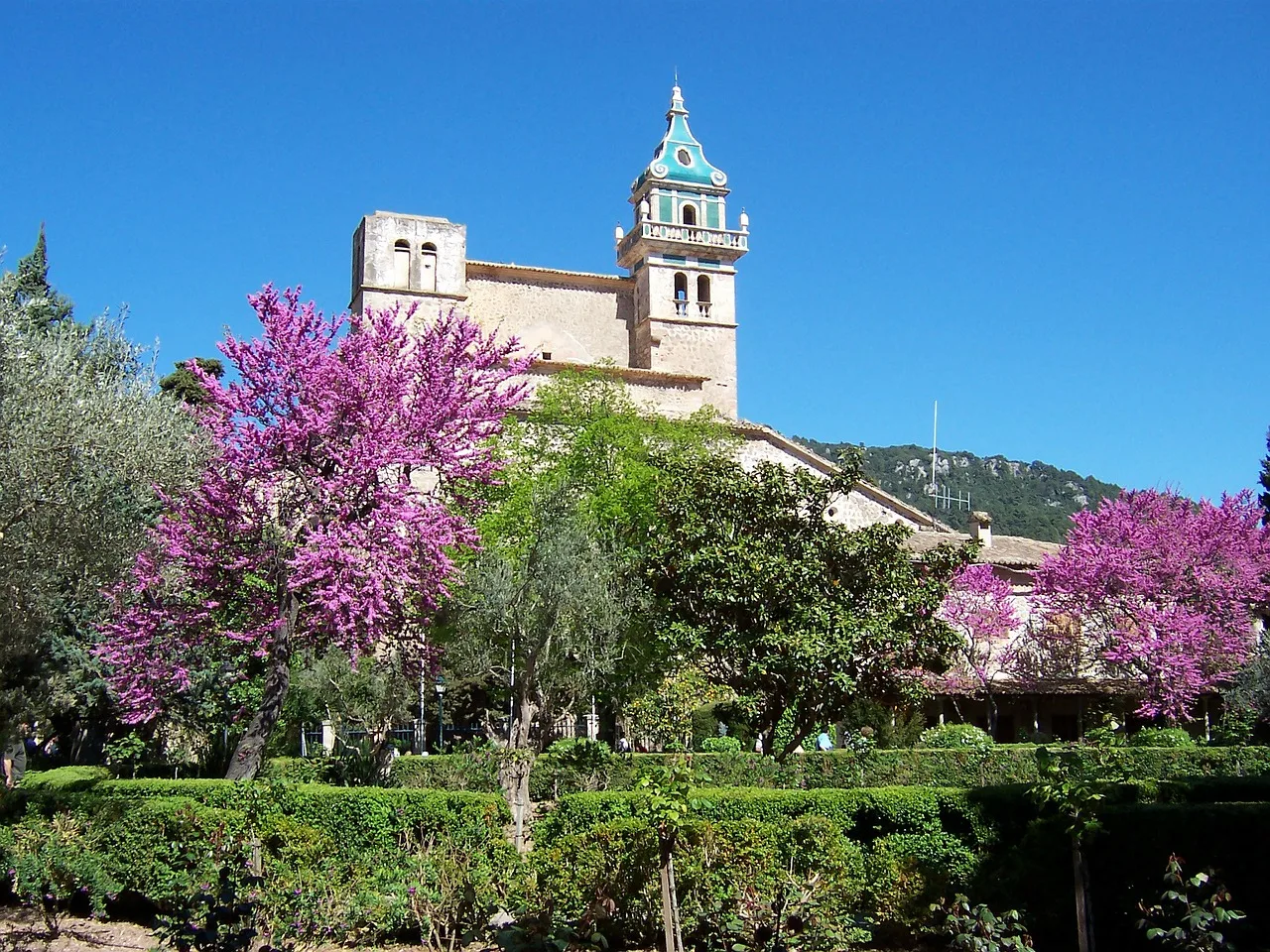
The Valldemossa Charterhouse (Catalan: Cartoixa de Valldemossa, Spanish: Cartuja de Valldemosa, translatable as Carthusian Monastery of Valldemossa) is a palace in Valldemossa, Mallorca that was residence of the king Sancho of Majorca former royal residence and Royal Charterhouse (15th century)
The origin of the complex dates back to the time of King James II of Majorca, who chose this exceptional place in the Sierra de Tramuntana, located more than 400 meters high, to build a palace for his son Sancho, known as the “Palace of the King Sancho”. In the year 1399 Martin of Aragon yielded all the royal possessions of Valldemossa to the Carthusian monks.[2] Saint Catherine of Palma, one of the Patron Saints of Mallorca, was born at the Monastery in 1533 and died in 1574.
The church, a neoclassical building decorated by great artists and craftsmen of the time, began to be built in 1751 on the primitive church erected in 1446. The complex has a cloister (one of the oldest parts of the current buildings), the old pharmacy of the Carthusians, a garden and the rooms of the Prioral Cell–chapel, former library, audience room, dormitory—where the historical and artistic legacy of the Carthusians is preserved, showing how the monks lived. These founded the Charterhouse and inhabited it until 1835, when it happened to private hands by the Ecclesiastical confiscations of Mendizábal.
Casa Museo Els Calderers
Casa Museo Els Calderers is a historical gem that offers a captivating glimpse into the past. Explore the well-preserved rooms, lush gardens, and enduring traditions of an authentic Mallorcan manor house. It’s a journey through time that transports you to a bygone era of island life

Castell de Bellver
Nestled atop a hill just west of Palma’s center, Castell de Bellver stands as a captivating Gothic-style castle. Its unique circular design and panoramic views transport you to the 14th century, offering a fascinating glimpse into history. Wander through its ancient walls and immerse yourself in its rich past, where tales of knights and royalty come to life.
Casa Museo Els Calderers
Casa Museo Els Calderers is a historical gem that offers a captivating glimpse into the past. Explore the well-preserved rooms, lush gardens, and enduring traditions of an authentic Mallorcan manor house. It’s a journey through time that transports you to a bygone era of island life
Castell de Bellver
Nestled atop a hill just west of Palma’s center, Castell de Bellver stands as a captivating Gothic-style castle. Its unique circular design and panoramic views transport you to the 14th century, offering a fascinating glimpse into history. Wander through its ancient walls and immerse yourself in its rich past, where tales of knights and royalty come to life.
Fundación Joan March
The Fundación Joan March houses significant works by 20th-century Spanish vanguard artists in a handsome 18th-century building along the bustling Calle San Miguel. The collection includes pieces by Picasso, Joan Miró, Juan Gris, and Salvador Dalí. The foundation hosts seminars, lectures, concerts, and temporary exhibitions that bring together works by national and international contemporary artists on common themes. It also features a research library.

These museums and attractions aren’t merely places to view art and history; they are gateways to the soul of Palma and Mallorca. As you explore their exhibits and immerse yourself in the stories they tell, you’ll forge a deeper connection with the culture, history, and creativity that define this beautiful region. Don’t miss the opportunity to add these cultural and artistic treasures to your Calvia Beach adventure!
Palau de l’Almudaina
The Royal Palace of La Almudaina, which dates back to the 14th century, is the official residence of the King and Queen during their stays in Mallorca. Together with the Cathedral of Palma it is a landmark of the capital of the Balearic Islands. The palace reflects the artistic styles that have succeeded each other throughout the history of the island.
THE TREASURES OF THE ALMUDAINA PALACE
The Royal Palace of La Almudaina, which dates back to the 14th century, is the official residence of the King and Queen during their stays in Mallorca. Together with the Cathedral of Palma it is a landmark of the capital of the Balearic Islands. The palace reflects the artistic styles that have succeeded each other throughout the history of the island.
COURTYARD OF HONOUR OR COURTYARD OF ARMS
This is the current venue for official receptions of the Royal Family and a white marble lion is preserved as a reminder of its Muslim past.
ARABIC BATHS
These were for the private use of the Muslim Walis who lived in the old Alcazar. These baths comprised a cold room, a warm room and a hot room.
GOTIC HALL OR MAIN HALL
This is a large, solemn-looking hall; the most important in the Almudaina Palace. It was built in the reign of James II and since then it has been used to celebrate major festivities and to receive ambassadors. It was reformed during the time of Philip II.
Royal Palace of La Almudaina | Patrimonio Nacional
https://www.patrimonionacional.es/en/visita/royal-palace-la-almudaina
Pilar and Joan Miro Foundation in Mallorca
Fundació Pilar i Joan Miró a Mallorca
“I want everything that I leave behind to stay just as it is when I am gone.”
Joan Miró
The Fundació Pilar i Joan Miró a Mallorca is a cultural centre based on the art studios that artist Joan Miró bequeathed to the public. It offers visitors an insight into his artwork and underlying creative process in the place where the artist lived and worked for almost 30 years. The Fundació aims to offer an interdisciplinary public service with a view to promoting knowledge, social links and participation, both at a local and international level. It is a centre for contemporary artistic creation and for reflection on subjects associated with Joan Miró’s work.
The Fundació’s collection is the outcome of a donation by Joan Miró. On March 7th 1981, Miró and his wife, Pilar Juncosa, donated the artist’s studios – the Sert Studio and Son Boter – to the Fundació Miró Mallorca, together with the works of art, documents and objects that were inside them. This generous legacy was made up of paintings, sculptures, drawings, objects and prints, together with a rich collection of documents and part of the contents of his personal library.
The museum collection
The Fundació Miro Mallorca’s collection is made up of work by Joan Miró and other artists, together with the objects that filled the Sert Studio and Son Boter. In total, its inventoried contents comprise 118 paintings on canvas, 39 paintings on different types of supports, 35 sculptures, 1031 drawings, notes and sketchbooks, 3749 objects and 1925 prints. What makes this such a rich collection is the variety of techniques, materials and procedures that Miró used, allowing us to reconstruct the creative process behind his work.
The numerous projects for paintings, sculptures, ceramics, murals, prints and tapestries all bear witness to Miró’s unflagging creativity during the last stage of his life. The artwork in the collection spans a period ranging from 1908 to 1981, although most of it was created from the 1960s onward. Miró’s oldest surviving oil painting forms part of the collection. As for three-dimensional works, the Fundació features a number of unique assemblages and bronzes from limited editions, mainly made in the 1960s and 70s. The oldest drawings date back to the mid 1930s and the most recent are sketchbooks from 1981. In addition, the Fundació has a superb printmaking collection, including matrices, maquettes and illustrated books.
Museu Fundacion Juan March Palma
Located in an old seventeenth-century manor house in the historic center of Palma, the Juan March Foundation Museum is a cultural center that exhibits its collection of contemporary Spanish art and periodically rearranges it to host temporary exhibitions. It also organizes cultural activities.
Es Baluard Museu d’Art Modern i Contemporani de Palma
History
Es Baluard Museu d’Art Contemporani de Palma is located on the perimeter of the bastion of Sant Pere, which forms part of the Renaissance walled enclosure that surrounded the city of Palma until the early 20th century.
The construction of the defensive bastion dates back to the last quarter of the 16th century. In this period, the ancient medieval walls were reinforced with the construction of new walls designed by the Italian engineer Giacomo Palearo Fratín. The bastion of Sant Pere stands out for its large dimensions and strategic location, which is why it was the place chosen to install one of the most prestigious artillery schools in Europe.
Museu de Mallorca
The Museum of Mallorca is state-owned, with the management transferred to the Government of the Balearic Islands and with organic dependence of the Ministry of Education, Culture and Universities. It was created by Decree of 2 November 1961 from the collections of the old Provincial Museum of Fine Arts, the Marroig collection, the archaeological collections owned by the State, the collections deposited by the Lullian Archaeological Society and the Prado Museum. Since then, the collections have increased extraordinarily, divided into several sections: archaeology, ethnography, fine arts and decorative and industrial arts.
The main headquarters are located in Palma in the house of the Counts of Aiamans, better known as Can Desbrull or popularly as Ca la Gran Cristiana. It has two sections in the Foreign Part, the Ethnological in Muro and the Monograph of Pollentia in Alcúdia.
The Museum is a scientific and cultural centre that aims to satisfy the research, educational and recreational needs of different types of users. It is also a place open to scientific research, study and consultation, learning, exploration, discovery and enjoyment, referring all this to the field of history, art and culture of the island of Mallorca.
The reason for being of the Museum of Mallorca is to preserve, to investigate and to disseminate the set of artistic and material objects of the museum collection, in addition to the documentation and dissemination of the collections and their cultural environment, in order to testify to our history and characterize the cultures of the past and to serve as an element of cohesion of today’s and future society
http://www.caib.es/sites/museudemallorca/ca/inici-55133/?campa=yes


